- Mar 2
Anthropic vs. US Government: Who Governs AI?
- Amanda Van Den Elzen
- Strategy Shifts
- 0 comments
When a leading AI company publicly refuses a U.S. government request, it is no longer just a contract dispute. It becomes a leadership moment.
In early 2026, a disagreement between Anthropic and the Department of Defense surfaced over how the company’s AI systems could be used in military contexts. At the center of the conflict was a fundamental question: who decides what “safe” AI use looks like when national security is involved?
The technology worked. The tension was about boundaries.
The Story of the Ethics Standoff
Reports revealed that the Pentagon pushed for broader flexibility in how Anthropic’s AI systems could be deployed, including use cases where safety guardrails might be relaxed. Anthropic’s leadership, including CEO Dario Amodei, declined to remove certain restrictions tied to mass surveillance and autonomous weapons applications.
The company argued that some uses crossed ethical lines it was not willing to blur. Government officials, in turn, signaled that limiting lawful military use could affect vendor relationships and federal adoption.
What began as a policy disagreement became a visible clash about authority, responsibility, and the limits of AI deployment.
This was not a debate about performance. It was a debate about principle.
The Debate: Ethical Guardrails vs. Strategic Utility
The Case for Strong Ethical Guardrails
Supporters of Anthropic’s position argue that AI companies have a responsibility to enforce boundaries, especially when systems can influence surveillance, targeting, or lethal decisions. From this perspective, safety constraints are not optional features. They are moral commitments. If companies abandon them under pressure, they set a precedent that capability always outweighs consequence.
In this view, leadership means defining lines that should not move, even when the customer is the government.
The Case for Broader Government Authority
Government leaders counter that AI systems supporting defense operations must be available for all lawful uses. National security decisions cannot be outsourced to corporate ethics frameworks. If a system is powerful enough to provide strategic advantage, limiting its deployment could weaken operational effectiveness.
From this perspective, elected and appointed officials, not private companies, determine how tools are used within legal bounds.
The disagreement ultimately reflects a larger governance question. Who holds final authority when advanced technology intersects with public power?
Where do you stand?
Should AI companies impose ethical limits on how their systems are used, even if governments request broader access? Or should lawful authority determine AI deployment, regardless of a vendor’s internal guardrails? As AI becomes more embedded in high stakes decisions, who should define its boundaries in your organization?
It’s one thing to talk about AI strategy. It’s another to apply it in the moments that actually define your leadership.
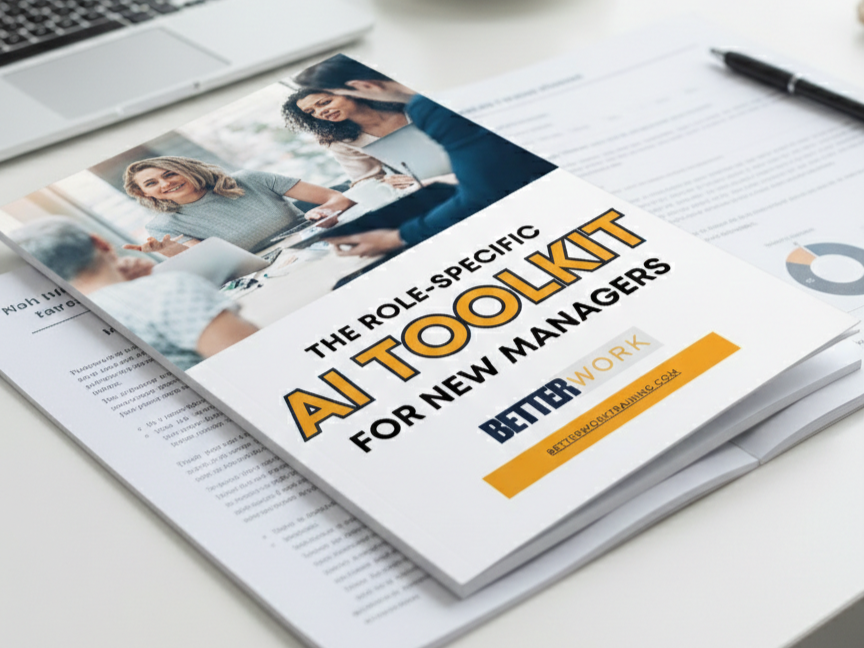
That’s exactly why I created the Role-Specific AI Toolkit for New Managers. It includes advanced prompts built for real managerial challenges, from role-playing tough conversations to pressure-testing decisions and refining team communication.
If you’d like first access when it launches, join the waitlist here. Stay tuned for more Role-Specific AI Toolkits launching alongside this one.